Bottle 22: Peerless Small Batch Kentucky Straight Bourbon Whiskey
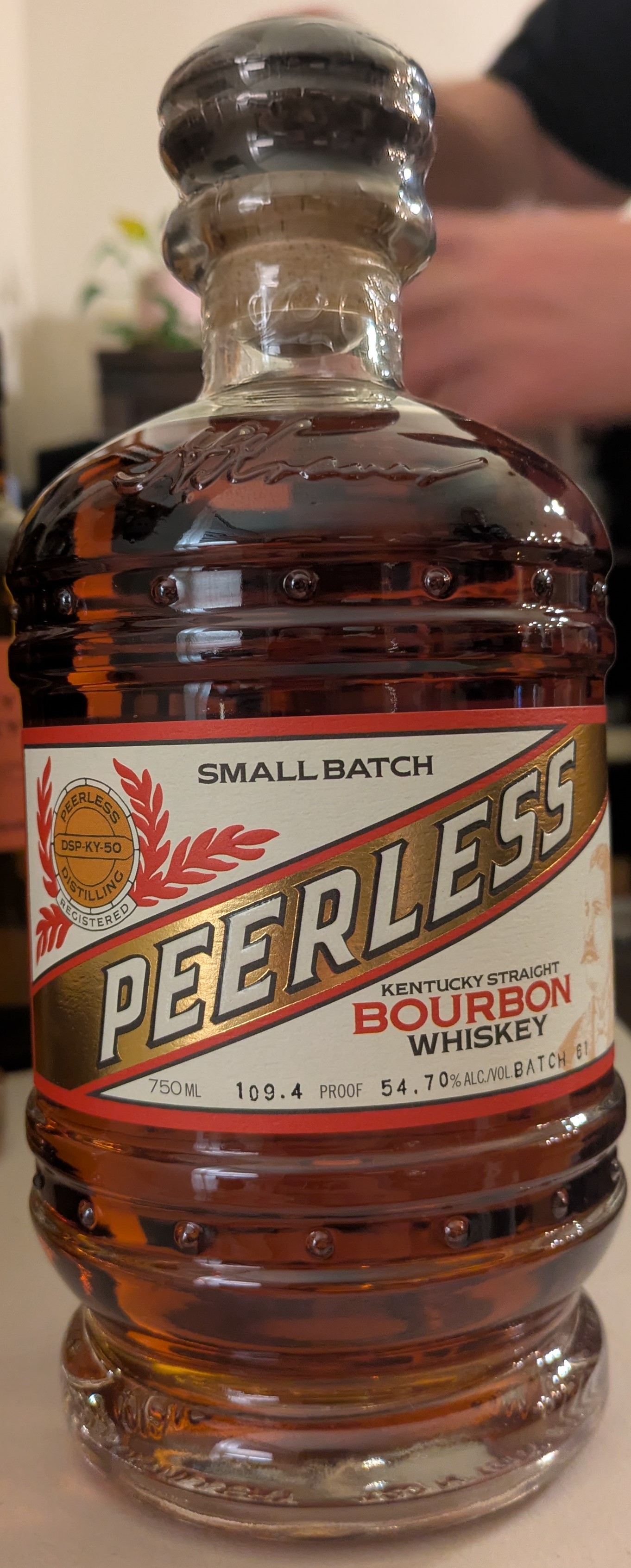
Peerless Small Batch Kentucky Straight Bourbon Whiskey
Distillery: Peerless Distilling
Region/Country: Louisville, Kentucky
Age: at least 4 years
ABV: 54.70%
Cask type(s): new oak casks
Grain Bill: undisclosed
Tasting Notes
- Nose: citrus, cedar, honeysuckle, and a nice balance of spicy oak
- Palate: “The first sip is caramel and toasted oak before a multitude of notes from around the flavor wheel appear on the palate”
- Finish: “an enduring duel between sweet and spicy notes as citrus, florals, and sweet oak struggle for dominance against dry cocoa, cinnamon, and spicy oak”
Bourbon, Neat
by Walker Percy
Not only should connoisseurs of bourbon not read this article, neither should persons preoccupied with the perils of alcoholism, cirrhosis, esophageal hemorrhage, cancer of the palate, and so forth—all real enough dangers. I, too, deplore these afflictions. But, as between these evils and the aesthetic of bourbon drinking, that is, the use of bourbon to warm the heart, to reduce the anomie of the late twentieth century, to cure the cold phlegm of Wednesday afternoons, I choose the aesthetic. What, after all, is the use of not having cancer, cirrhosis, and such, if a man comes home from work every day at five-thirty to the exurbs of Montclair or Memphis and there is the grass growing and the little family looking not quite at him but just past the side of his head, and there’s Cronkite on the tube and the smell of pot roast in the living room, and inside the house and outside in the pretty exurb has settled the noxious particles and the sadness of the old dying Western world, and him thinking: “Jesus, is this it? Listening to Cronkite and the grass growing?”
Thomasing on the Longest Night
By Kate Bowler, from Substack. Enjoy the full reflection at the link.
There is a fabulous tradition that is celebrated today, December 21, about the embodiment of love. It was once known across Europe as St. Thomas’s Day. In England, it was the day of Thomasing—when the poor, especially widows, went door-to-door asking for food, firewood, or coins. Neighbors gave gladly, because it was understood: on the longest night of the year, no one should be left cold or hungry.