Bottle 13: Ardbeg Uigeadail
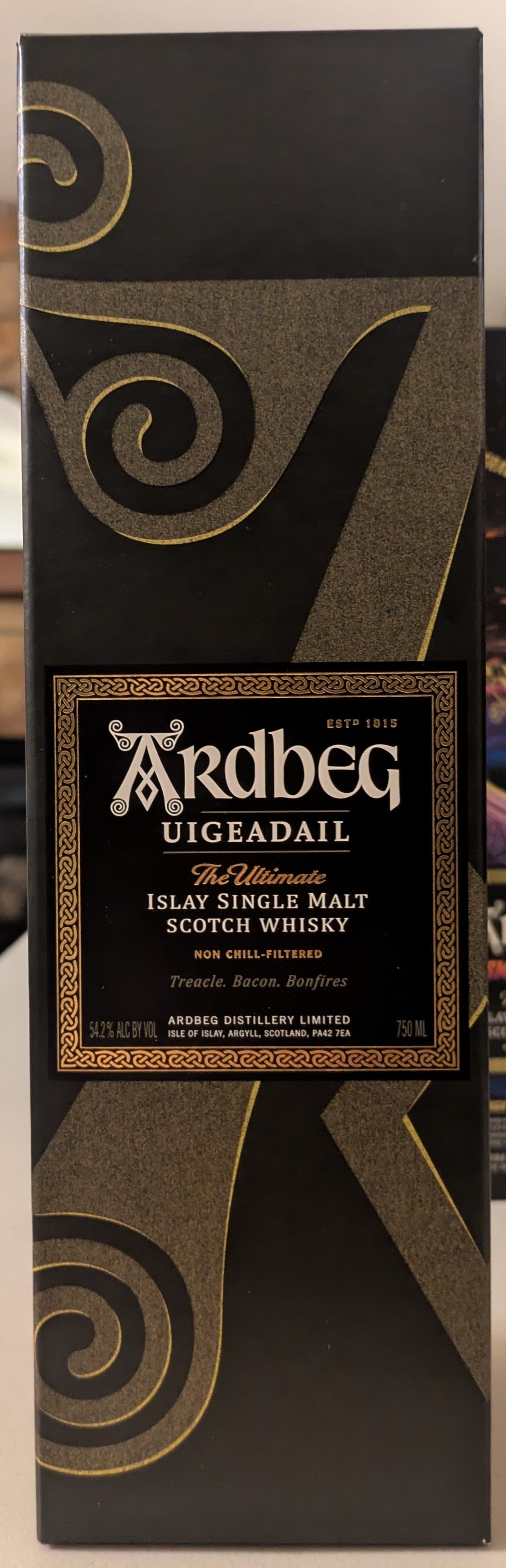
Ardbeg Uigeadail
Distillery: Ardbeg Distillery
Region/Country: Islay, Scotland
Age: NAS
ABV: 54.2%
Cask type(s): ex-bourbon American oak, ex-sherry Oloroso casks
Grain Bill: 100% malted barley
Tasting Notes
- Nose: warm Christmas cake, walnut oil and parma violets fused with fresh ocean spice, cedar and pine needles falling from the Christmas tree. A smouldering coal fire and the scent of well-oiled leather brings warmth. The sweetness of treacle toffees and chocolate-coated raisins emerge through the smoke.
- Palate: The flavour is initially sweet. A burst of winter spices sets off a smoky-spicy explosion countered by a sumptuous mid-palate of honey glazed smoked food and chewy treacle. Waves of deep smoky tones and rich aromas build up on the palate like a fine Montecristo cigar.
- Finish: lingering raisiny, deep mocha tones and rich aromatic smoke
Ardbeg Uigeadail
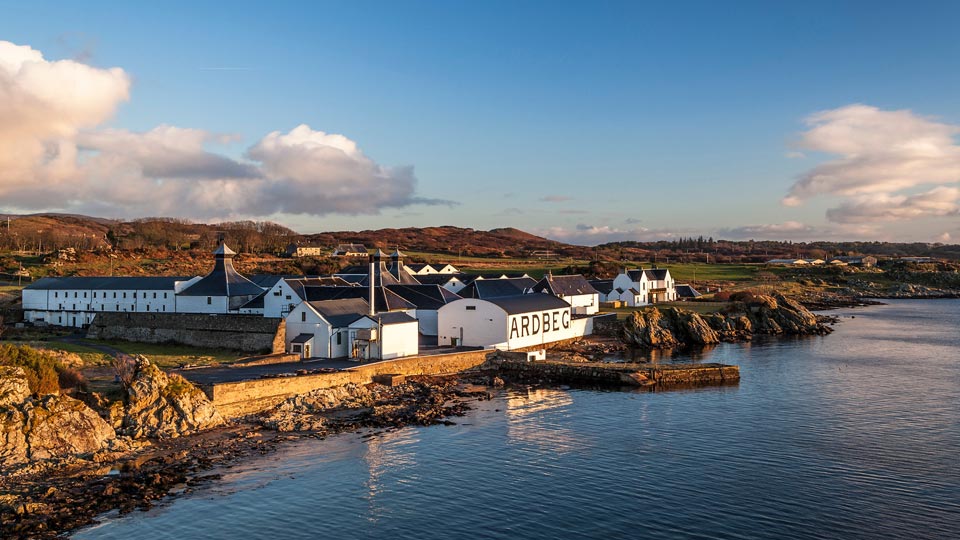
Besides being fun to say, Uigeadail (pronounced ‘Oog-a-dal’) is name for Loch Uigeadail1 which the distillery pulls its water from, and winner of two double gold, three gold, and two silver medals between 2006 and 2012 at San Francisco World Spirits Competition. The strong smokey notes are well-balanced with a deep sweetness from the sherry casks. It’s a nice one to keep on the shelf if you like Islay whiskies.
Advent Reflection
Jesus zerbricht das Gewehr, by Otto Pankok
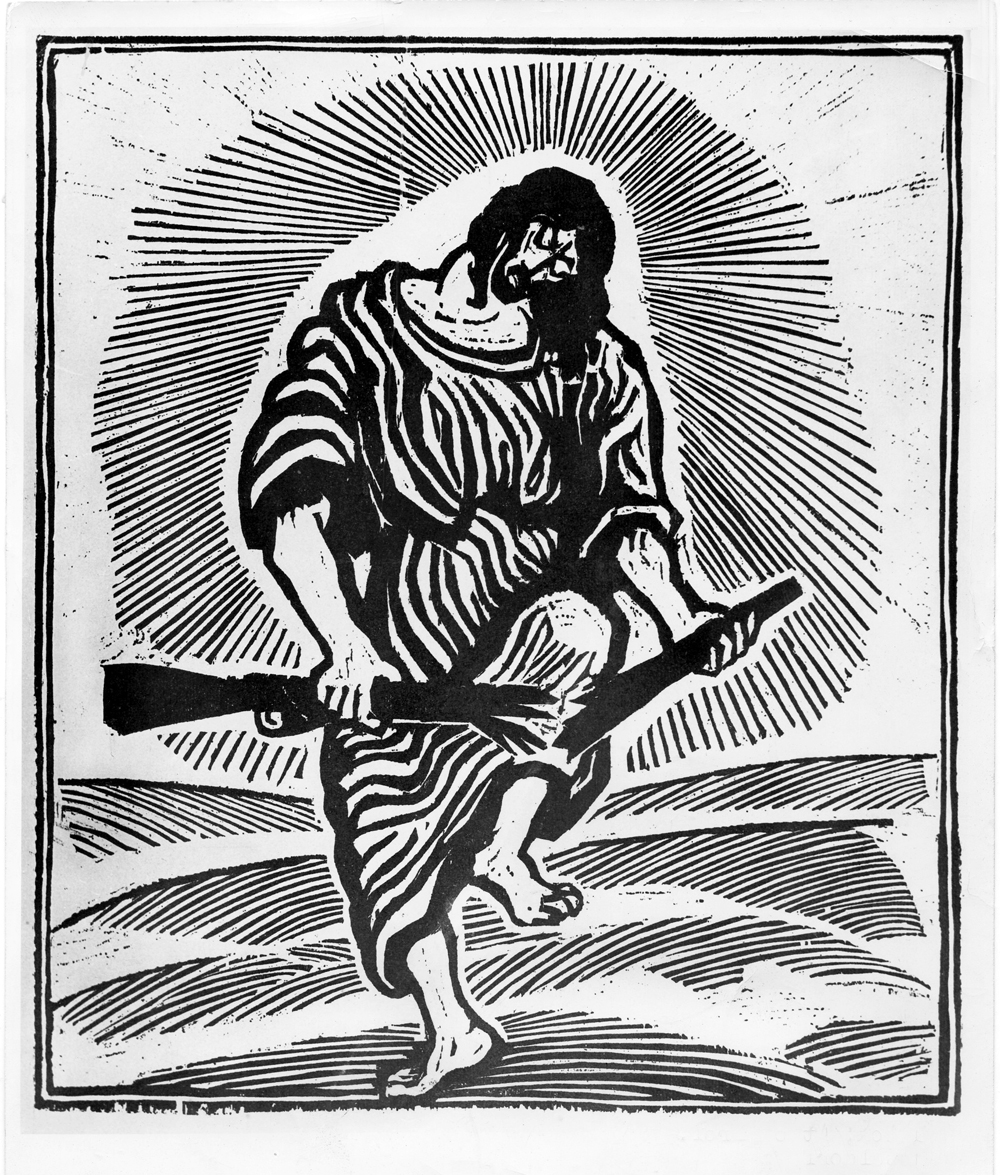
Otto Pankok (born 6 June 1893 in Mülheim/Ruhr, died 10 October 1966 in Wesel) was a German painter, printmaker, and sculptor associated with expressive realism. He trained at art academies in Düsseldorf and Weimar and became known for his intense portrayals of marginalized people—especially Sinti and Roma—long before the Nazi era.
Pankok’s work was deeply rooted in a humanitarian and ethical concern for the “suffering and oppressed” and reflected a moral as well as aesthetic commitment to the dignity of others. His imagery—frequently depicting the lives of socially excluded groups—was informed by a Christian-influenced humanism that emphasized compassion and resistance to cruelty.
As the Nazi regime consolidated power in the 1930s, Pankok’s commitment to artistic truth and social empathy brought him into direct conflict with official doctrine. He refused to conform to the regime’s dictates to paint safe, decorative subjects and instead continued to depict Jews, Sinti, and Roma and to give visual voice to their persecution. He protested directly in a letter to Nazi ideologue Alfred Rosenberg in 1933 against censorship of his work.
The regime labeled him a “degenerate artist,” removed dozens of his works from museums, forbade him from exhibiting, and subjected him to surveillance by the Gestapo. To avoid arrest and continue working, he withdrew to rural areas and lived in internal exile during the war, hiding many of his works and sheltering friends persecuted under Nazi racial laws. In one notable instance he hid a Jewish painter and his wife, a deed for which Pankok and his wife Hulda were later recognized as Righteous Among the Nations by Yad Vashem.
Footnotes
“dark, mysterious place”↩︎