Bottle 11: Peerless Kentucky Straight Rye Whiskey
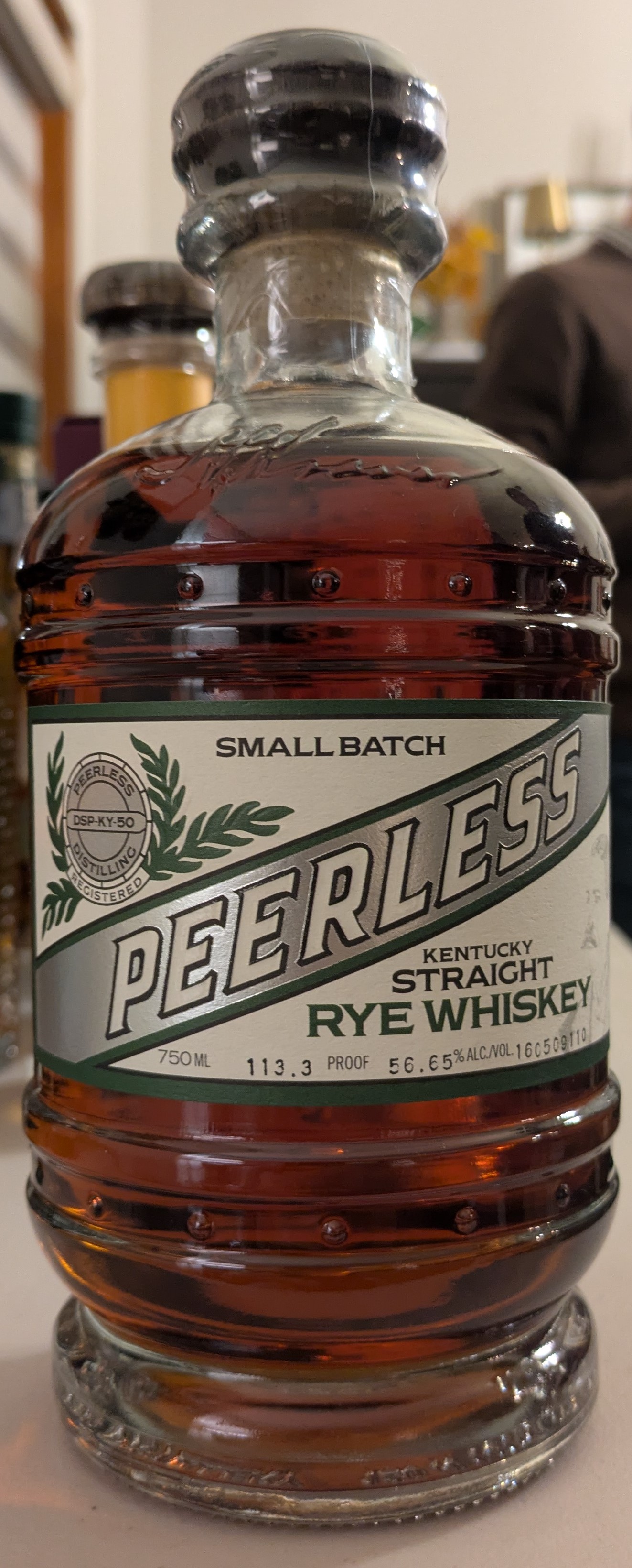
Peerless Kentucky Straight Rye Whiskey
Distillery: Kentucky Peerless Distilling Co.
Region/Country: Louisville, Kentucky
Age: 4 years
ABV: 56.65%
Cask type(s): charred oak
Grain Bill: undisclosed
Tasting Notes
- Nose: sugar cookie, maple, buttered cinnamon bread
- Palate: maple, brown sugar, and light citrus sweetness.
- Finish: English toffee, charred oak, cola
The Death of Rye in America
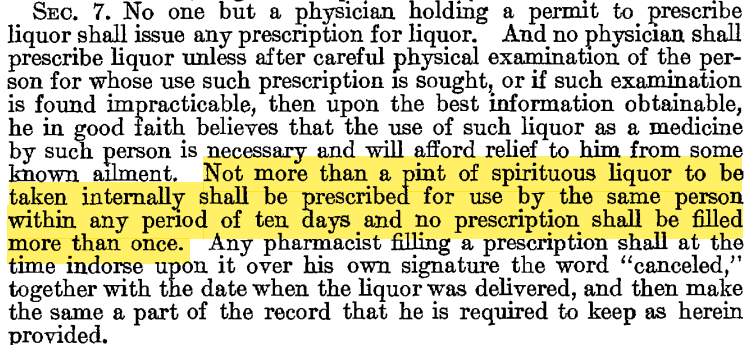
Rye and bourbon were prevalent in early America— rye was a common product in the northern states, and distillation was a great way to preserve the harvest. Bourbon was more common in the south, where corn naturally grew. Then, in January 1919, national Prohibition was instituted through the eighteenth amendment. Congress passed The Volstead Act prohibiting alcoholic drinks, except in certain circumstances— one of which was for “medicines that are unfit for use for beverage purposes”. This, of course, led to a significant increase in prescriptions by physicians for “medicinal” whiskey.
Most of the whiskey sold during this era seems to have been aged for a while; the Food and Fuel Control Act of 1917 prohibited the production of liquor from food sources since the US was engaged in war overseas. What could be sold was what was already stored. Distillers had seen prohibition coming, and stock-piling of product was already happening before the law took hold.
Many distillers didn’t survive prohibition. Some, including Iowa’s Templeton Distillery, thrived.1 But rye and bourbon were both well-represented in the “medicinal” whisky space.
So what did rye in? Farm subsidies. After prohibition ended, distillery stocks were low, the war was over, and people were ready to start celebrating again. Months after prohibition ended, the Agricultural Adjustment Act of 1933 was passed to help farmers through the Great Depression. Corn was a subsidized crop; rye was not.

Advent Reflection
Prayer of St. Francis of Assisi
Lord, make me an instrument of your peace:
where there is hatred, let me sow love;
where there is injury, pardon;
where there is doubt, faith;
where there is despair, hope;
where there is darkness, light;
where there is sadness, joy.
O divine Master, grant that I may not so much seek
to be consoled as to console,
to be understood as to understand,
to be loved as to love.
For it is in giving that we receive,
it is in pardoning that we are pardoned,
and it is in dying that we are born to eternal life.
Footnotes
Templeton thrived because in the small town where the rye was made, everyone was in on it, according to distillery representatives.↩︎