Bottle 08: Nelson Brothers Straight Rye Whiskey

Nelson Brothers Straight Rye Whiskey
Distillery: Nelson Green Brier Distillery
Region/Country: Nashville, Tennessee
Age: NAS
ABV: 46.25%
Cask type(s): new charred oak barrels
Grain Bill: 64% Rye, 30% Corn, 6% Malted Barley
Tasting Notes
- Nose: Clove, honeysuckle, anise
- Palate: Nutmeg, dried apricot, sweet mint
- Finish: Leather, cinnamon stick, cedar
Rye
Apparently, rye is a little difficult to farm.
I was going to write a little about how rye fell out of popularity thorughout history, which somehow led to me reading about a persecuted Soviet geneticist.
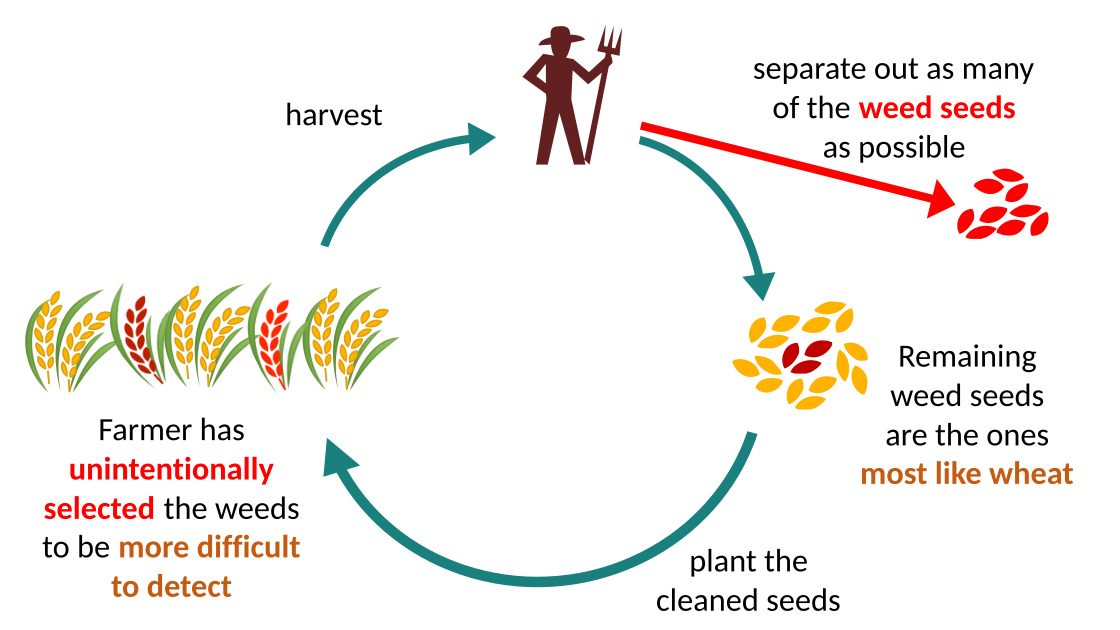
Nikolai Ivanovich Vavilov was a leading plant breeding and geneticist researcher in the Soviet Union. He hypothesized that rye was “accidentally” domesticated into a crop through something which is known today as Vavilovian mimicry: rye, which was an undesired crop/weed, was removed by farmers as they were growing wheat. Farmers removed all of the rye that was most visually distinct from the rest of the crop, leaving the more convincing “mimics” to propogate. Eventually, rye and wheat looked nearly identical.
Vavilov became a convenient scapegoat for the regime, and for his botanical crimes against the Motherland, he was starved to death in prison.
Anyways, that sounded a little more interesting to me tonight than talking about Prohibition; we’ll save that for another night. So pour a glass for yourself (and perhaps pour one out for Nikolai), and reflect on the evolutionary marvels that brought us this sassy glass of spirit. The corn in the mashbill should sweeten this up a bit compared to our last rye.
Advent Reflection
The Lord spoke to me again:
“Because this people has refused the waters of Shiloah that flow gently, and rejoice over Rezin and the son of Remaliah, therefore behold, the Lord is bringing up against them the waters of the River, mighty and many — the king of Assyria and all his glory. And it will rise over all its channels and go over all its banks, and it will sweep on into Judah, it will overflow and pass on, reaching even to the neck, and its outspread wings will fill the breadth of your land, O Immanuel.”
Be broken, you peoples, and be shattered;
give ear, all you far countries;
strap on your armor and be shattered;
strap on your armor and be shattered.
Take counsel together, but it will come to nothing;
speak a word, but it will not stand,
for God is with us.
For the Lord spoke thus to me with his strong hand upon me, and warned me not to walk in the way of this people, saying: “Do not call conspiracy all that this people calls conspiracy, and do not fear what they fear, nor be in dread. But the Lord of hosts — him you shall honor as holy. Let him be your fear, and let him be your dread. And he will become a sanctuary and a stone of offense and a rock of stumbling to both houses of Israel, a trap and a snare to the inhabitants of Jerusalem. And many shall stumble on it. They shall fall and be broken; they shall be snared and taken.”
But the Lord of Hosts
him you shall regard as holy;
let him be your fear,
and let him be your dread.
Isaiah 8.13
Faithful living in an age of panic 1
Isaiah 8.1-15
Luke 22.31-38
Deliverance and judgment intermingled continue to characterize our Isaiah text. While Jerusalem is under siege, God tells Isaiah to write on a large clay tablet: “The spoil speeds, the prey hastens” (Hebrew: maher-shalal-hash-baz) As a witness to the coming deliverance. Then somewhat later, before the siege is lifted, Isaiah’s wife (the prophetess) bears a child who is to be named Maher-shalal-hash-baz, the same peculiar words as on the tablet (v.3). Like Immanuel, this name is a sign of hope, clearly specifying the doom of Judah’s enemies. And as with Immanuel, a time frame is given. Before the child says its first words (“Daddy” or “Mommy”), the wealth of Syria (Aram) and Ephraim will be carried off as spoil by the Assyrian king (v.4).
Yet, Judah has spared one enemy only to be almost drowned by another. Since the people are opposed to Ahaz’s policy of submission to Assyria (characterized as the waters of Shiloah that flow gently, v.6), God is bringing the mighty flood waters of the River, symbolizing the Assyrian king. The river of Assyria will not just flood Ephraim and Syria, it will overflow into Judah and reach up to the neck. Isaiah hints that only Jerusalem, which is the head of Judah (see 7.8), will be spared, a thought that leads him to challenge Jerusalem’s enemies to do their worst since it will be thwarted by the gracious presence of “God with us” (vv.9-10).
Isaiah then receives a stern warning from God (perhaps in response to his outburst of confidence) not to be fooled by the false bravado of the people (v.11). Rather than being carried away by the general panic of the times, Isaiah is to be in holy awe of the Lord of Hosts, who is the real actor in the momentous political drama being played out here (v.13). Although this God will be a sanctuary of refuge for those who trust in his historical purpose (difficult though they are to accept) for the majority who want to resist the Assyrian empire (as was appropriate in the past) God will become a stone of stumbling and a rock of offense (v.14).
Just try telling Jews in the eighth century B.C. (or modern Christians in the twentieth A.D.) that the good old days of glory and triumph are over, and that God now wills judgment and suffering for the nation’s massive sins, a suffering which can still be minimized but not averted if only they follow a policy of nonresistance. Change times require a changed discernment, and Isaiah has been trying to prepare Judah for its drastic, transformed role in the world. But to no avail. Even Jerusalem will resist (v.14), God grimly predicts, and many will stumble and fall, be snared and captured (v.15).
In our own period of chaos and panic over free trade agreements, factory closings, and government budget cuts, how do we find our orientation? It is easy to be swept away—almost drowned—by the wave of fear that sustains public reaction to events beyond our control. Especially when that fear fuels a holy impatience born of biblical sensitivities. Yet if Isaiah’s discernment applies at all to our turbulent recessionary times, so does his challenge to a quiet, persevering trust in God. Such trust, explains Peter (quoting Isaiah 8.12-13) is a fundamental prerequisite for our witness to the gospel—even if it leads to our suffering (1 Pet 3.14-17). In this we will simply be following our Lord whose advent in likewise turbulent times was, after all, the beginning of his journey to the cross.
Footnotes
Walsh, Brian J., J. Richard Middleton, and Mark Vander Vennen. The Advent of Justice: A Book of Meditations. Edited by Sylvia Keesmaat. Illustrated by Willem Hart. Sioux Center, Iowa. Dordt College Press, 1994.↩︎