Bottle 01: Redemption Straight Rye Whiskey
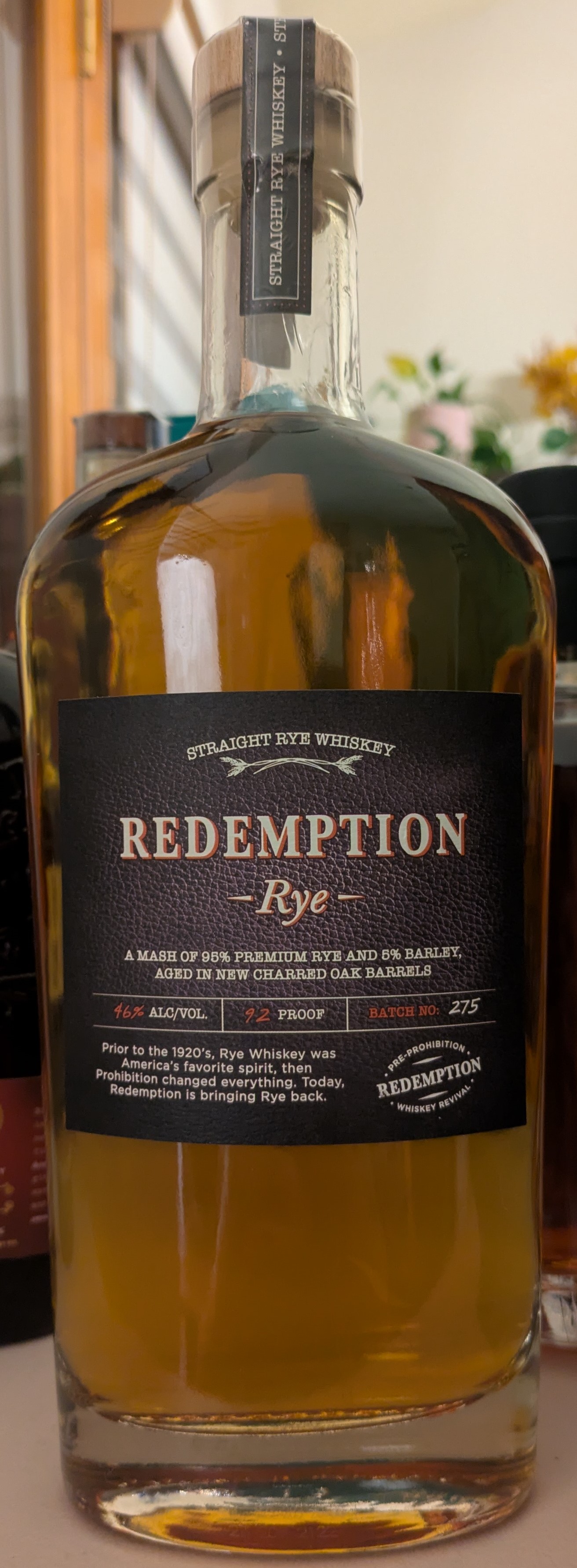
Redemption Straight Rye Whiskey
Distillery: MGP
Region/Country: Indiana, USA
Age: 2 years
ABV: 46%
Cask type(s): New charred oak
Grain Bill: 95% rye / 5% malted barley
Tasting Notes
- Nose: Big and spicy, toasted oak, vegetal notes, allspice and anise
- Palate: Beautiful rye spice with light floral and citrus notes along with dark spices and black pepper
- Finish: Slight mint finish makes this great for sipping or mixing in a classic cocktail
What’s a Rye Whiskey?
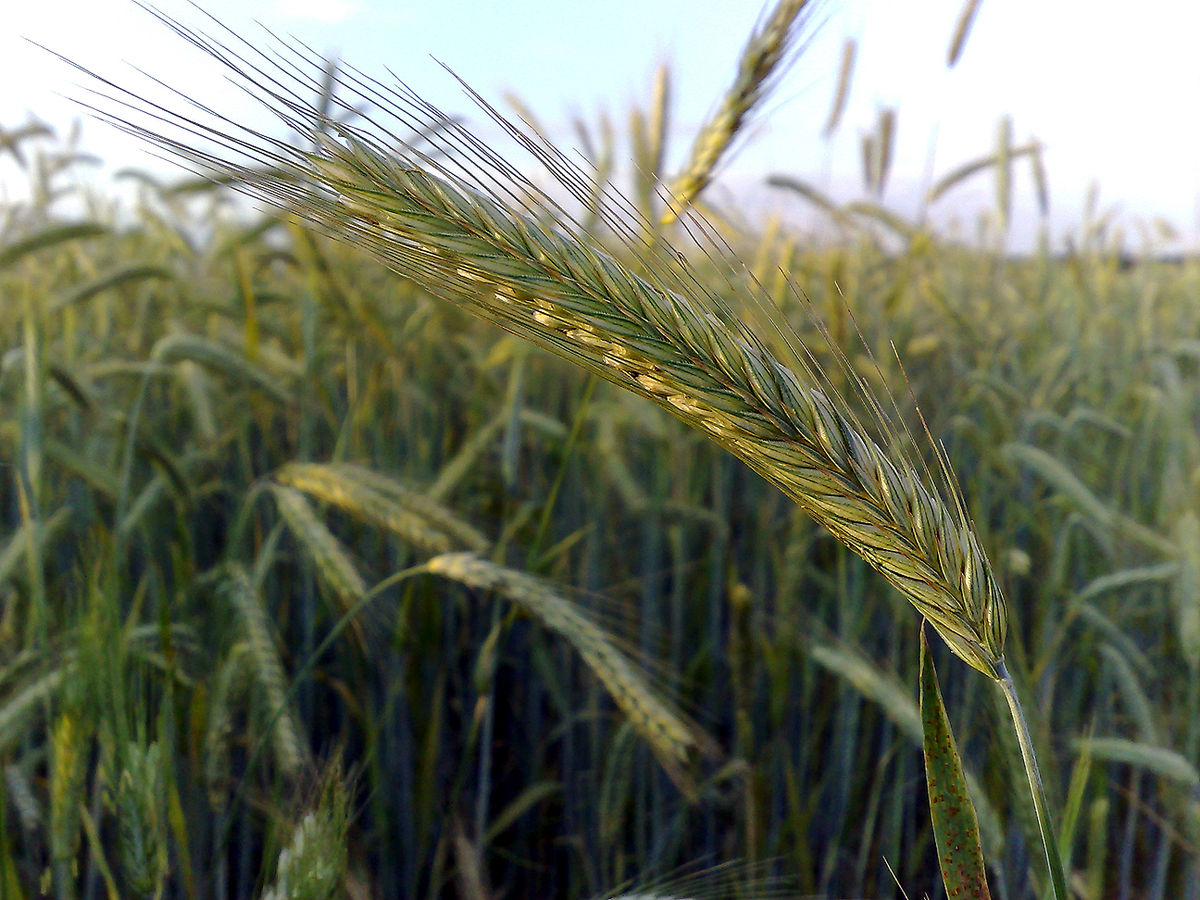
American rye whiskey has most of the same requirements as bourbon. It must be
produced in the U.S.It can be produced anywhere.- made from a grain mixture of at least 51%
cornrye, - aged in new, charred oak containers,
- distilled to no more than 80% ABV
- bottled at 40% ABV or more.
Pliny the Elder wrote that rye “is a very poor food and only serves to avert starvation”1. So take a sip and suffer in silence as you assess what a rye-forward grainbill can taste like; it should give us some good context for the ryes to come. Classic rye tasting notes can include:
- Pepper & spice: Cinnamon, black pepper, etc. The majority of rye whiskies have a strong peppery or spicy flavour.
- Subtle fruitiness and sweetness: Notes of apple, pear, or dried fruits
- Herbal undertones: Some rye whiskies also include herbal undertones, such as dill or mint.
- Oak and vanilla: Vanilla, caramel, and toasted oak flavours from the charred barrel.
Advent Reflection
Hear the word of the Lord, you rulers of Sodom; listen to the instruction of our God, you people of Gomorrah!
“The multitude of your sacrifices—what are they to me?” says the Lord. “I have more than enough of burnt offerings, of rams and the fat of fattened animals; I have no pleasure in the blood of bulls and lambs and goats.
When you come to appear before me, who has asked this of you, this trampling of my courts? Stop bringing meaningless offerings! Your incense is detestable to me.
New Moons, Sabbaths and convocations— I cannot bear your worthless assemblies. Your New Moon feasts and your appointed festivals I hate with all my being. They have become a burden to me; I am weary of bearing them.
When you spread out your hands in prayer, I hide my eyes from you; even when you offer many prayers, I am not listening. Your hands are full of blood!
Wash and make yourselves clean. Take your evil deeds out of my sight; stop doing wrong.
Learn to do right; seek justice. Defend the oppressed. Take up the cause of the fatherless; plead the case of the widow.
“Come now, let us settle the matter,” says the Lord. “Though your sins are like scarlet, they shall be as white as snow; though they are red as crimson, they shall be like wool.
If you are willing and obedient, you will eat the good things of the land; but if you resist and rebel, you will be devoured by the sword.”
For the mouth of the Lord has spoken.
Blood or justice? 2
There was no identity problem in Jerusalem. These people knew who they were and what they were to do. They were Yahweh’s covenant people, and they knew that the way to maintain the security of covenantal life was by obeying the law. The law was clear about their responsibility to keep Sabbath and to offer sacrifices for sin, guilt, and thanksgiving.
We know what it means to be God’s people today, too. We go to church, pay our tithe, and support the work of a variety of Christian organizations. This is what it means to follow Christ today.
But now comes this prophet, supposedly speaking for God, questioning us: “Who asked this from your hands?” Who asked this? Why, God did, that’s who! Offering such sacrifices is what obedience is all about. It is precisely because we are obedient in these matters that our security is established and our prosperity flourishes. Anyway, on what authority does this Isaiah question these divinely sanctioned practices?
Isaiah’s word from the Lord leaves no doubt. “I’ve had enough of this burnt offering business! I can’t endure anymore of your hymn sings and worship services! I hate it all! This stuff is no more than a burden to me. It’s all wearing me out! In fact, you can stop your incessant prayers—I’m not listening anymore!” Why? Why have you changed your mind about what you want from us? “Because your hands are full of blood.”
Yes, the Temple is an architectural wonder. Yes, we are building air-conditioned churches with large parking lots full of the latest in automobile technology. Yes, the Christian community has airtime on television and radio. Yes, we can amass thousands to march for Jesus. But into this “Christian” reality Isaiah interjects these disturbing words: “Your hands are full of blood.” Could it be that in this short, penetrating phrase the prophet uncovers the reality of our world, which all of our religious activities so desperately try to cover up?
Well, God, if renewed enthusiasm in our worship life and church growth isn’t meeting the bill, then what is it that you really want?
Cease to do evil, learn to do good.
But what does that really mean?
Seek justice. Rescue the oppressed. Defend the orphan. Plead for the widow.
It is in such activities that covenantal people renew and maintain their identity. Indeed, the true health of a community that would live in covenant with God is gauged precisely by the way in which that community cares for those who are the weakest and most powerless. Seeking justice is not merely an interesting pastime for the politically-minded among us. It is a central and indispensable sign of covenantal vitality and fidelity.
Sabbath feasts, solemn assemblies, church services, and hymn-sings cannot wash the blood off our hands. Only getting our hands dirty and bloody in the seeking of justice for the oppressed can do that.
Footnotes
Pliny the Elder. Natural History. Translated by H. Rackham, W. H. S. Jones, and D. E. Eichholz. 10 vols. Cambridge, MA: Harvard University Press; London: W. Heinemann, 1938–1962. Book 18, section 40.↩︎
Walsh, Brian J., J. Richard Middleton, and Mark Vander Vennen. The Advent of Justice: A Book of Meditations. Edited by Sylvia Keesmaat. Illustrated by Willem Hart. Sioux Center, Iowa. Dordt College Press, 1994.↩︎